Marketing
Matcha’s 2026 Price Reset: Beyond the Trend
How structural supply shifts are driving raw costs.
By Leon Liang · reviewed by Grace Luo · July 24, 2026 · 4 min read

The short answer: 2026 Japanese tencha auction averages reset raw matcha input costs, and the published figures point to a structural supply squeeze—not a social-media spike that snaps back.
Most Chinese tea exporters view the current matcha shortage as a demand wave: social media sparked a trend, Japan can’t keep up, and there is a brief window to sell green powder before the fashion fades.
The spring auction data suggests a different reality. At the Kyoto Uji tencha auction on 13 May, 375 lots (roughly 25 tonnes) cleared at an average of ¥13,972 per kilogram—1.7 times the previous record of ¥8,235 set only a year prior, per the Global Japanese Tea Association’s May 2026 report. The data reveals a supply reset driven by a decade of structural decline. The volume in this category has already shifted. Treating this as a passing trend is a costly mistake.
The 2026 Auction Data
The following day, Kagoshima’s tencha trading averaged around ¥19,000 per kilogram—roughly 1.8 times the prior year—with 27 factories participating (a 50% increase in participation over 2025).
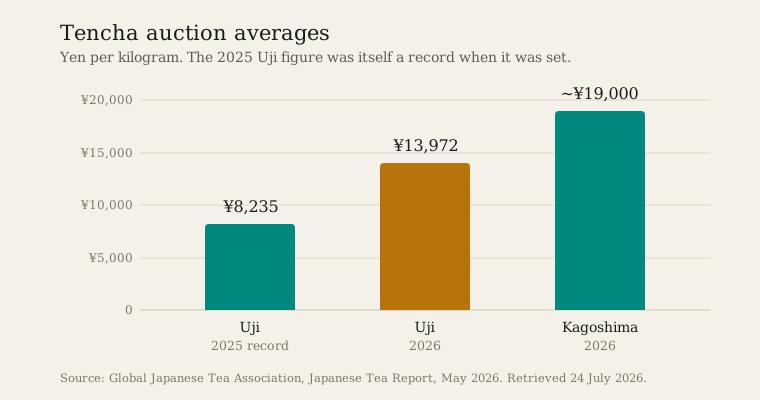
Because tencha is the shade-grown leaf ground into matcha, these figures represent raw input costs, not retail markups. According to the report, manufacturers’ raw-material costs have more than doubled, which will likely trigger retail price increases of approximately 20%.
Why Prices Won’t “Snap Back”
While extreme heat is the immediate culprit, the underlying drivers are structural and slow-moving.
According to the Tea & Coffee Trade Journal, Japan’s harvestable tea fields dropped roughly 30% over the last decade to 25,400 hectares by 2025. Simultaneously, the agricultural labor force fell by about 25% between 2020 and 2025.
Processing capacity also creates a hard ceiling:
- Traditional tencha-ro brick stoves: ~0.8 tonnes/day
- Modern equipment: ~1.6 tonnes/day
These are not variables that recover in a single good season. When a price level is set by shrinking acreage and a thinning workforce, it tends to stay there.
The Squeeze Beyond Matcha
If you export ordinary green tea rather than matcha, this reset still affects you.
As farmers convert more fields to tencha to chase higher margins, they tighten the supply of other crops. At the Koka City sale in Shiga on 1 May, the average sencha bid doubled to ¥14,232, while the top bid hit ¥180,000 per kilogram—nine times the previous year. Local tencha cultivation in the area has risen by about 70%.
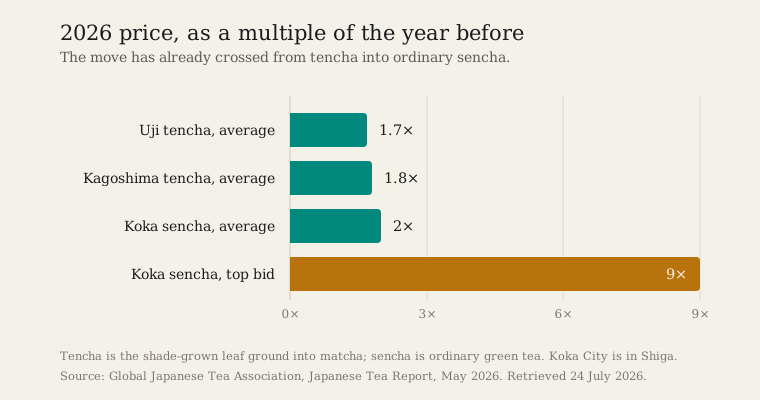
The effect is not contained to ceremonial grade. The conversion to tencha is shrinking the sencha supply, meaning your input costs—and those of your competitors—will rise even if matcha isn’t on your product list.
Where the Volume Actually Sits
This is the critical reframing for any exporter.
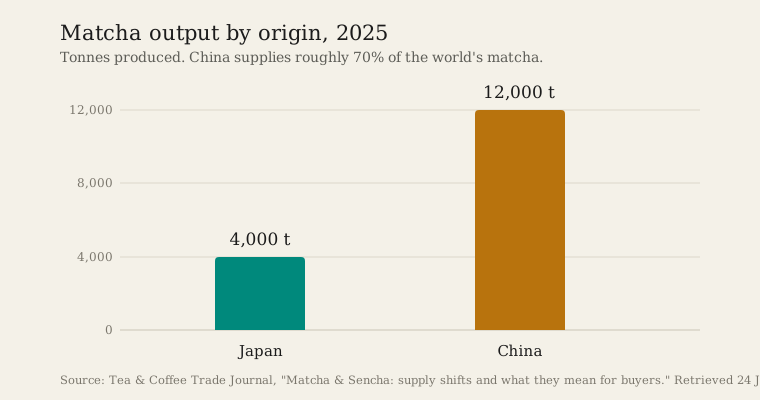
In 2025, Japan produced roughly 4,000 tonnes of matcha. China produced roughly 12,000 tonnes—nearly 70% of the global supply. China’s active matcha production lines have grown from 120 to nearly 600; Guizhou alone is targeting over 13,000 hectares of tencha and an annual capacity of 8,000 tonnes.
Japan retains the prestige, the origin story, and the brand name. It no longer controls the tonnage.
From a Price Question to a Documentation Question
The demand is real. Per STiR, Japan’s powdered green tea exports reached 8,700 tonnes in 2025 (up 71% YoY), and total green tea exports hit 13,125 tonnes. North America absorbs more than half of Japan’s matcha exports.
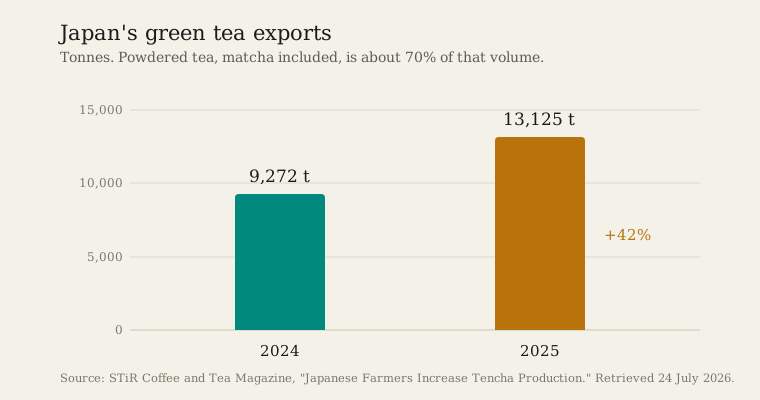
However, buyers paying “reset” prices become far more scrutinizing. Scarcity often leads to lower grades being sold under premium labels—a trend already noted in the trade press.
This is where the conversation shifts from price to provenance. Terms like “Ceremonial” have no regulatory definition in the US; they are claims. “Uji” is a geographic claim. A professional US buyer’s QA process will require you to substantiate both, just as they would for any other label claim, using the standard document set.
Easterlies view — The opportunity here is not about price. You cannot win a reset market by being the cheapest option; the cheapest tin is exactly what a cautious buyer is currently screening out. The real competitive advantage is a comprehensive data file: precise origin, a clear definition of “grade” in your specs, milling methods, and verifiable evidence. Decide which claims you can actually back before you print them. A slower start with a rigorous spec leads to a much shorter QA cycle.
The Practical Takeaway
Easterlies view — Price your next twelve months based on a reset. Assume elevated tencha costs are the new baseline, sencha supply remains tight, and North American buyers remain both interested and cautious.
Focus on the variables you control. Matcha at volume is now a Chinese product, and the primary barrier to North American market entry is documentary, not agricultural. Ensure your origin, grade basis, and specifications are in a format a QA reviewer can approve without needing a phone call.
For supplier-consulting work outside the Easterlies-distributed matcha range, we coordinate the specialists who handle this without becoming the client’s importer, certifier, lab, or counsel. That boundary is separate from Easterlies’ own role as buyer/importer and FSVP maintainer for the matcha it distributes. We audit a consulting client’s product and claims against what a North American buyer will actually demand. If that is useful, get in touch. If you aren’t ready for this market yet, we will tell you honestly.
About Easterlies
We built Easterlies to carry matcha from producer to wholesale buyer. The same bilingual team still helps tea and food businesses navigate the Pacific.
Request samples